 Image: VCU Libraries from Richmond, VA, USA (CC BY 2.0)
The team that reported more mistakes
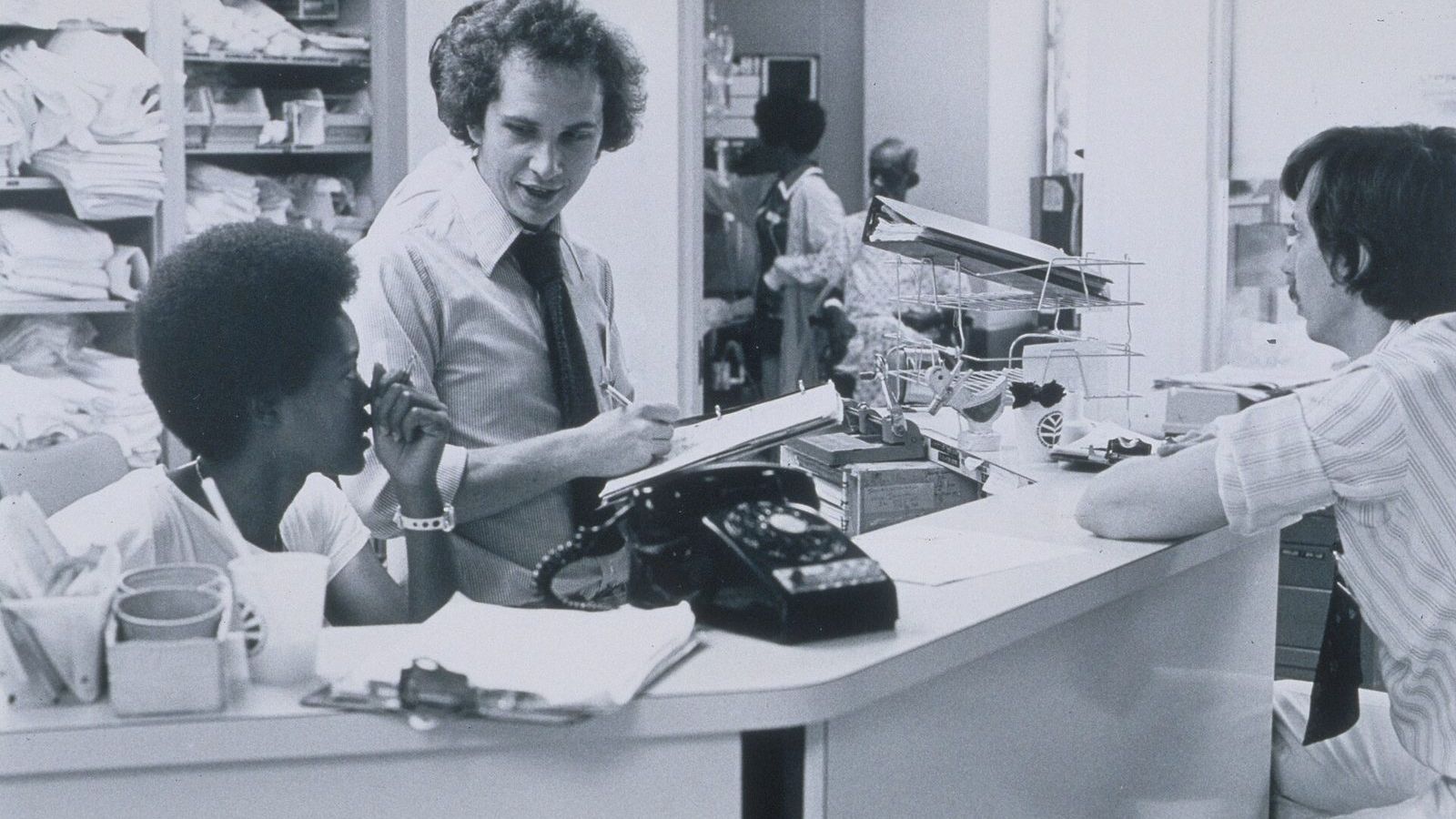
In the early 1990s Amy Edmondson, then a doctoral student at Harvard, joined a study of medication errors in two Boston hospitals. The study followed eight nursing teams for six months and counted the errors each made: a wrong dose, a wrong drug, a drug given at the wrong time. Edmondson's part of the work was to measure how well each team was led and how well its members worked together, with surveys and observation, and her hypothesis was the obvious one. Better teams would make fewer errors.
The data came back the other way. The teams whose members rated their nurse managers most highly and described the best relationships with their colleagues reported the most errors, by a wide margin. Edmondson, as she has told the story many times since, assumed at first that she had the sign wrong, and then that the better teams were somehow careless. Neither held up. A research assistant who did not know the survey results was sent to observe the teams, and he came back with a different explanation. In some teams, he reported, nurses talked openly about mistakes and the nurse manager treated an error as something to learn from. In others, a nurse who admitted an error could expect to be blamed, and the sensible thing to do with a mistake was to keep quiet.
The better-led teams were not making more errors. They were reporting more of them. The paper that came out of this, 'Learning from Mistakes Is Easier Said Than Done', appeared in the Journal of Applied Behavioral Science in 1996, and it is the origin of a construct that has since become one of the most studied in the field.
The 1999 definition
Edmondson gave the idea its name and its definition in a 1999 paper in Administrative Science Quarterly, based on a study of 51 work teams in a manufacturing company. Psychological safety is a shared belief, held by the members of a team, that the team is safe for interpersonal risk-taking. The risks in question are the small ones of working life: asking a question that might sound ignorant, admitting an error, raising a concern about someone else's work, proposing an idea that might be rejected. In a team with high psychological safety people take those risks because they expect not to be punished or humiliated for them. In a team with low psychological safety they do not.
The 1999 study linked the belief to behaviour and the behaviour to results. Teams with higher psychological safety showed more learning behaviour, which Edmondson measured as seeking feedback, discussing errors, and experimenting, and the teams with more learning behaviour performed better as judged by managers who did not know the survey scores. The causal chain ran from safety to learning to performance, and later work has filled in the links.
What it is not
The term has travelled far from the nursing teams, and some of what it has picked up on the way is wrong. Psychological safety is not niceness, and it is not low standards. A team can be warm, polite, and entirely unsafe, if the politeness means that nobody says what they think. A team can be blunt to the point of rudeness and safe, if the bluntness is about the work and nobody is diminished for being wrong. Edmondson has drawn the distinction as a two-by-two: high safety with high standards is a learning zone, high safety with low standards is a comfort zone, and low safety with high standards is anxiety. The hospital teams that reported their errors held themselves to high standards; that is why the errors were worth reporting.
It is also not the same as trust. Trust is something one person extends to another; psychological safety is a property of a group, a belief about how the group will respond. And it is not a personality trait of the individual nurse or engineer. The same person behaves differently in two teams, and the studies find far more variation between teams in the same organization than between organizations.
Twenty-five years of evidence
The research spotlight of Unit 7 of the masterclass is the review that Edmondson and Derrick Bransby published in 2023 in the Annual Review of Organizational Psychology and Organizational Behavior, which traces the literature from the 1999 paper through several hundred later studies. The findings fall into four groups: psychological safety is associated with getting work done, with learning behaviour, with how people experience their work, and with leadership, in the sense that what the leader does is the strongest predictor of how safe a team feels.
Two cautions belong next to that summary. Most of the studies are surveys in which the same people report both the safety of their team and its behaviour, and such data can inflate a correlation. And the construct became popular enough, after a large technology company published an internal study in 2015 naming it the most important factor in its teams' effectiveness, that some of the later literature measures the fashion rather than the thing. The review is honest about both, which is one reason the unit chose it.
What a manager can do
The nurse managers of the better teams in 1996 were not running workshops on psychological safety. They were doing a few ordinary things consistently. They treated an error as information. They asked questions and admitted their own gaps. They responded to a reported mistake by asking what had happened rather than who had done it. The research since has confirmed that these behaviours, which Edmondson groups as framing the work as a learning problem, acknowledging one's own fallibility, and modelling curiosity, are what move the measure.
The cost of their absence can be counted. A team that does not report its errors cannot fix the process that produces them, and in a hospital the process will produce the same error again for a different patient. The same logic applies to a software team that does not report bugs before a release, a trading desk that does not report a near miss, or an aircraft crew in which the first officer does not question the captain. Unit 10 returns to the last of these in its account of the Challenger launch decision of 1986, where engineers who had doubts about the seals did not press them against a management that wanted to launch.
Unit 7 presents psychological safety in the section on teams as the construct with the best evidence on learning, states its 1999 definition in words, and tells the story of the nursing teams as a worked case. The point of the story is the one that surprised Edmondson in 1996: the number of problems a team reports is not a measure of how many it has.