 Image: Western Electric Company, public domain
What the Hawthorne studies actually found
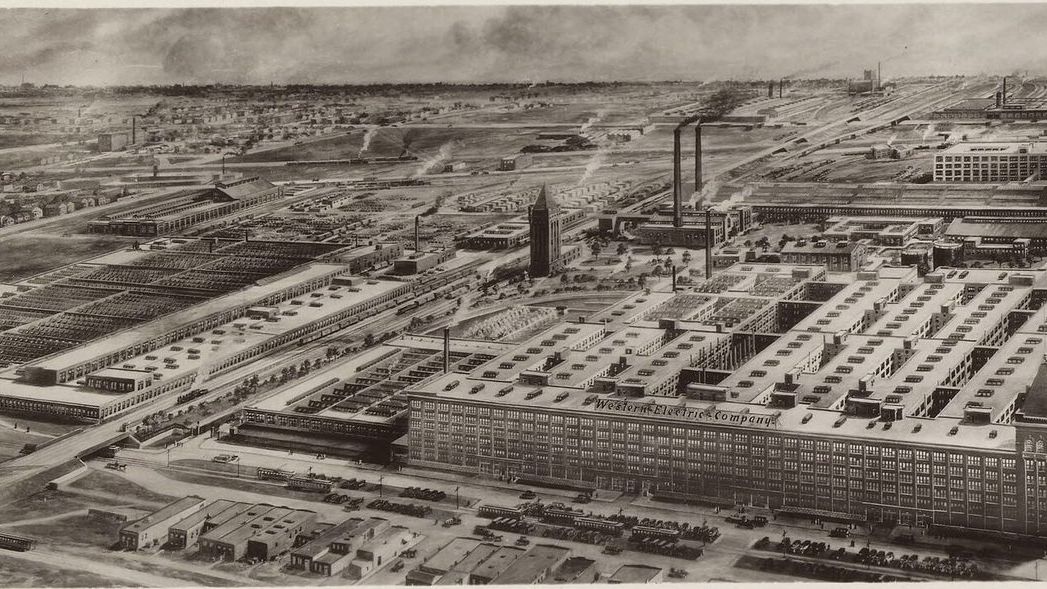
The Hawthorne Works of the Western Electric Company, in Cicero on the western edge of Chicago, made telephones and telephone equipment for the Bell system and employed about 40,000 people in the 1920s. It was a plant with its own hospital, fire brigade, and railway sidings, and it had, unusually for its time, a management interested in research. Between 1924 and 1932 it hosted a series of experiments on workers and their output whose name has outlived the plant. The Hawthorne effect is in every introductory textbook, and most of what the textbooks say about it is wrong.
The illumination experiments
The first studies, from 1924 to 1927, were about light. Electricity companies and the National Research Council wanted to know whether brighter workplaces raised output, and Hawthorne offered rooms and workers. The experimenters raised the lighting for one group of workers and left it unchanged for another, and output rose in both groups. They lowered the lighting, and output stayed up, until the light was so dim that the workers complained they could not see. The story told ever since is that output rose whatever the experimenters did, because the workers knew they were being studied and responded to the attention, and that this response, named the Hawthorne effect by Henry Landsberger in 1958, contaminates every experiment on people.
The difficulty is that the illumination data were never published. The accounts that reached the textbooks were second-hand summaries, and the original records were thought to be lost. In 2011 Steven Levitt and John List of the University of Chicago found them on microfilm in two archives and published the re-analysis in the American Economic Journal: Applied Economics under the title 'Was there really a Hawthorne effect at the Hawthorne plant?'. Their answer: there was little evidence of one. Output in the experimental rooms varied with the day of the week and the season, and the changes in lighting were made on Mondays, when output rose anyway after the weekend. Once those patterns were taken into account, the effect of being studied was small, and some of the most quoted findings, such as output rising when the lighting was cut, did not appear in the data at all.
The relay assembly test room
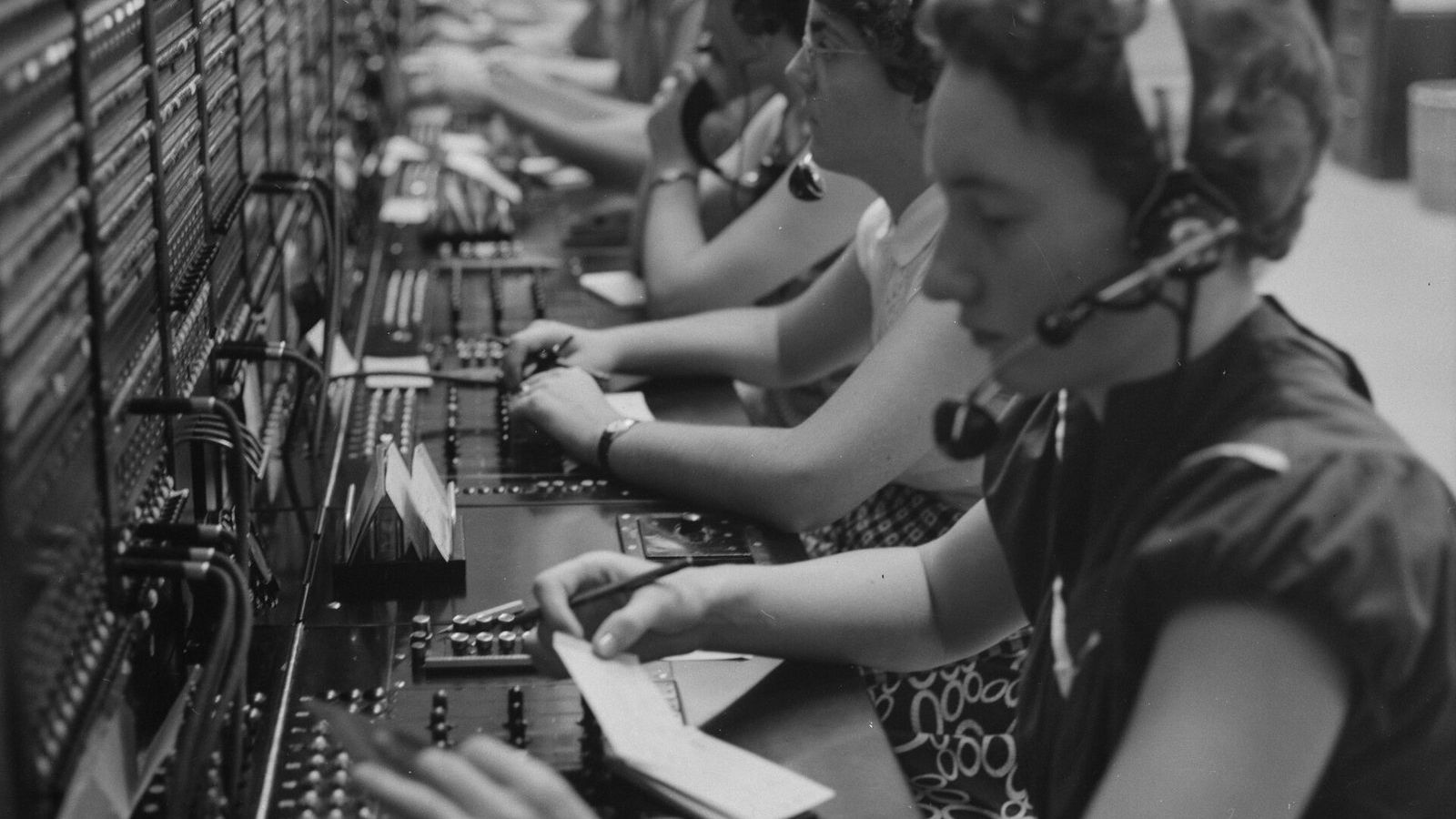
The second and more famous study began in April 1927. Five women who assembled telephone relays, each a device of about 35 parts that took a minute to put together, were moved from the main shop floor to a separate room with an observer, and over the next five years their working conditions were changed in a series of stages: rest pauses were introduced, shortened, and removed; the working day and the working week were cut and restored; free lunches were provided and then withdrawn. Output per hour rose through most of the stages, and it stayed up when the rest pauses were taken away. The researchers, joined from 1928 by Elton Mayo of the Harvard Business School, concluded that the physical changes were not what mattered. What mattered, in their reading, was that the women had become a group with a sense of their own importance, with an observer who consulted them, and with a supervisor who had stopped behaving like one.
That reading founded a school. The human relations movement, Mayo's lectures, and the 1939 book by Fritz Roethlisberger and William Dickson that reported the studies in full, taught a generation of managers that attention, consultation, and the informal group counted for more than the piece rate or the lighting. Much of modern organizational behaviour, including the work on teams and psychological safety that Unit 7 of the masterclass presents, descends from the test room.
What the relay room data show
The relay room data were published, and they have been re-analysed many times. Several things about them are awkward for the standard story. Two of the five women were replaced early in the study, after being reprimanded for talking too much and for low output, and the two who came in were faster workers. The group was paid on a small-group piece rate from the second stage onwards, so that each woman's pay depended on the output of the five rather than of the hundred in the main shop, which gave each a far stronger financial reason to work hard. And the economy changed under them: the study ran into the depression, when a job at Hawthorne was something to keep.
Economists who have reworked the series, including Richard Franke and James Kaul in 1978, found that the replacement of the two workers, the piece rate, and the depression explained most of the rise in output, leaving little for attention or group spirit. Sociologists have replied that the statistical models cannot capture what the observer's notes record, which is a group that came to like its work. The honest position, and the one the masterclass takes, is that the relay room showed something real about groups at work and that nobody can say from the data how large it was.
What survives
Three things survive the re-analyses. The first is that measuring people changes what they do, sometimes. The effect is not universal, as the illumination data show, but it exists in enough settings that a careful experiment on workers uses a comparison group that is also measured, so that the measuring is held constant. Unit 8 describes a field experiment on Indian textile plants designed in exactly that way.
The second is that the social organization of work matters, and that it can be studied. The Hawthorne researchers interviewed more than 20,000 employees between 1928 and 1930 and observed a bank wiring room in which the men had fixed an informal output norm that they enforced on each other, below what the piece rate rewarded. That finding, which has nothing to do with the lighting, has been replicated often enough to be believed.
The third is that the history of management is full of findings that were summarized before they were checked. The Hawthorne effect reached the textbooks through lectures and summaries, the original data went unexamined for eighty years, and when they were examined the story shrank. Unit 7 closes with a section on the measurement problems of the field, and Hawthorne is its first example.
The plant itself closed in 1983. A shopping centre stands on most of the site, and one tower of the old works survives beside it. The data from the illumination rooms sit on microfilm in Milwaukee and in Baker Library at Harvard, where anyone can read them, which is more than most of the people who have cited them have done.